Note 06
The figure of eight
Photograph the sun at the same clock time every week for a year and it traces a lopsided figure of eight.
Two things change through the year: the sun's declination, which moves it north and south, and the equation of time, which moves it east and west of where a clock says it should be. Plot one against the other and you get the analemma.
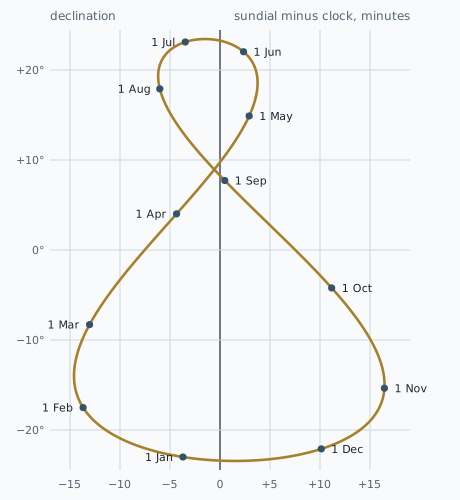
The two loops are unequal because of the elliptical orbit. The tilt of the axis on its own would make a symmetrical figure of eight; the ellipse adds a once-a-year swing that widens one loop and narrows the other.
Noon marks are sometimes drawn with an analemma around the meridian instead of a straight line. The spot of light then crosses the curve at noon by mean time rather than at solar noon, and the figure doubles as a calendar: each point on it belongs to one date, apart from the place where the curve crosses itself.
The same picture explains why the earliest sunset of the year comes in mid-December, before the shortest day: through December the sun runs later by the clock each day, and that pushes the evenings later even while the days are still getting shorter.